
News
December 05, 2025
Johor’s new energy freeport targets global oil trade — can it hold its own against regional rivals?
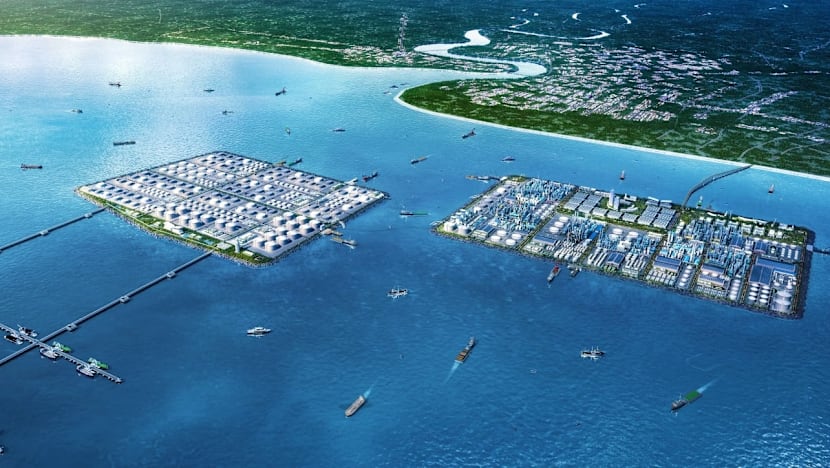
The Maharani Freeport - which consists of three manmade islands off the coast of Muar - is targeting crude carriers plying the Straits of Malacca. But can it lure business from more established ports in the region?
**Johor Aims to Disrupt Oil Trade with Ambitious New Freeport**
Johor, Malaysia, is making a bold play for a bigger slice of the global oil trade with the development of the Maharani Freeport, a new energy freeport strategically located off the coast of Muar. This ambitious project, consisting of three man-made islands, is directly targeting crude oil carriers navigating the bustling Straits of Malacca, one of the world's most vital shipping lanes. The question on everyone's mind: can this newcomer successfully compete with the established powerhouses of the region?
The Straits of Malacca are a critical artery for global trade, particularly for oil and gas shipments between the Middle East and Asia. The Maharani Freeport is designed to capitalize on this traffic by offering a comprehensive suite of services, potentially including storage, blending, distribution, and even refining activities in the future. The developers envision a hub that streamlines the movement of crude oil, making it an attractive alternative for companies looking to optimize their supply chains.
However, the path to success won't be easy. The region is already home to several well-established and highly efficient ports, including Singapore and other Malaysian ports like Port Klang and Tanjung Pelepas. These existing facilities boast significant infrastructure, established relationships with major industry players, and a proven track record. Luring business away from these competitors will require the Maharani Freeport to offer compelling advantages.
Analysts suggest that the Freeport's success hinges on several factors. Competitive pricing, efficient operations, and a commitment to cutting-edge technology will be crucial. Furthermore, the Malaysian government's support, in terms of streamlined regulations and incentives, will be vital to attract investment and build confidence among potential users.
The Maharani Freeport's strategic location certainly gives it an edge. Situated directly on the Straits of Malacca, it offers convenient access for vessels transiting the waterway. This could translate to reduced transit times and lower transportation costs for oil traders.
Ultimately, the Maharani Freeport represents a significant investment in Johor's economic future. Whether it can successfully challenge the regional giants and establish itself as a major player in the global oil trade remains to be seen. Its development will be closely watched by industry experts and stakeholders alike. The coming years will be a crucial test of Johor's ambition and its ability to carve out a niche in this highly competitive market.
Johor, Malaysia, is making a bold play for a bigger slice of the global oil trade with the development of the Maharani Freeport, a new energy freeport strategically located off the coast of Muar. This ambitious project, consisting of three man-made islands, is directly targeting crude oil carriers navigating the bustling Straits of Malacca, one of the world's most vital shipping lanes. The question on everyone's mind: can this newcomer successfully compete with the established powerhouses of the region?
The Straits of Malacca are a critical artery for global trade, particularly for oil and gas shipments between the Middle East and Asia. The Maharani Freeport is designed to capitalize on this traffic by offering a comprehensive suite of services, potentially including storage, blending, distribution, and even refining activities in the future. The developers envision a hub that streamlines the movement of crude oil, making it an attractive alternative for companies looking to optimize their supply chains.
However, the path to success won't be easy. The region is already home to several well-established and highly efficient ports, including Singapore and other Malaysian ports like Port Klang and Tanjung Pelepas. These existing facilities boast significant infrastructure, established relationships with major industry players, and a proven track record. Luring business away from these competitors will require the Maharani Freeport to offer compelling advantages.
Analysts suggest that the Freeport's success hinges on several factors. Competitive pricing, efficient operations, and a commitment to cutting-edge technology will be crucial. Furthermore, the Malaysian government's support, in terms of streamlined regulations and incentives, will be vital to attract investment and build confidence among potential users.
The Maharani Freeport's strategic location certainly gives it an edge. Situated directly on the Straits of Malacca, it offers convenient access for vessels transiting the waterway. This could translate to reduced transit times and lower transportation costs for oil traders.
Ultimately, the Maharani Freeport represents a significant investment in Johor's economic future. Whether it can successfully challenge the regional giants and establish itself as a major player in the global oil trade remains to be seen. Its development will be closely watched by industry experts and stakeholders alike. The coming years will be a crucial test of Johor's ambition and its ability to carve out a niche in this highly competitive market.
Category:
World