
News
December 03, 2025
Chinese, Japanese vessels engage in fresh standoff
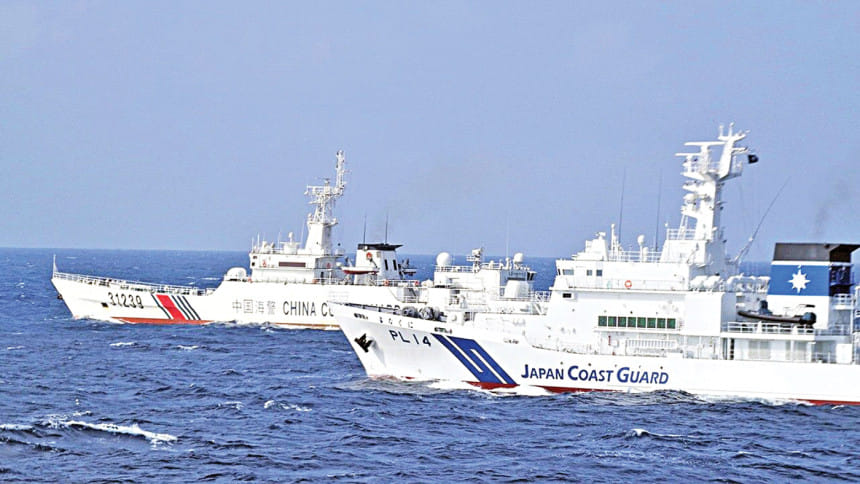
Japanese and Chinese vessels engaged in a fresh standoff around disputed islands yesterday, the two countries’ coast guards said.
**Chinese, Japanese vessels engage in fresh standoff**
Tensions flared once again in the East China Sea yesterday as Japanese and Chinese vessels engaged in a tense standoff near the disputed Senkaku/Diaoyu Islands. Both countries' coast guards confirmed the incident, highlighting the ongoing sensitivity surrounding the uninhabited islets claimed by both nations.
According to statements released by the Japanese Coast Guard, Chinese coast guard ships entered what Japan considers its territorial waters surrounding the islands. The Japanese vessels responded by issuing warnings, demanding the Chinese ships leave the area immediately. The Chinese Coast Guard, in turn, asserted its right to patrol the waters, claiming the islands as their own territory, referred to as the Diaoyu Islands in China.
While details remain scarce about the specific maneuvers and duration of the confrontation, sources indicate the encounter involved a period of close monitoring and repeated warnings exchanged between the vessels. There were no immediate reports of collisions or the use of weaponry.
This latest incident underscores the fragile relationship between China and Japan, with the territorial dispute over the Senkaku/Diaoyu Islands remaining a significant point of contention. The islands, located northeast of Taiwan, are strategically important and surrounded by potentially rich fishing grounds and possible undersea resources.
The frequent presence of coast guard and, at times, fishing vessels from both countries in the area has led to numerous standoffs in recent years. These encounters raise concerns about the potential for miscalculation or escalation, potentially drawing in other regional actors.
Analysts suggest that while neither China nor Japan desires a full-blown conflict, the ongoing dispute requires careful management and diplomatic efforts to prevent future incidents from escalating into something more serious. Both nations have been urged by international observers to engage in constructive dialogue and establish clear communication channels to de-escalate tensions and maintain stability in the region. The incident serves as a reminder of the complex geopolitical landscape in the East China Sea and the need for continued vigilance.
Tensions flared once again in the East China Sea yesterday as Japanese and Chinese vessels engaged in a tense standoff near the disputed Senkaku/Diaoyu Islands. Both countries' coast guards confirmed the incident, highlighting the ongoing sensitivity surrounding the uninhabited islets claimed by both nations.
According to statements released by the Japanese Coast Guard, Chinese coast guard ships entered what Japan considers its territorial waters surrounding the islands. The Japanese vessels responded by issuing warnings, demanding the Chinese ships leave the area immediately. The Chinese Coast Guard, in turn, asserted its right to patrol the waters, claiming the islands as their own territory, referred to as the Diaoyu Islands in China.
While details remain scarce about the specific maneuvers and duration of the confrontation, sources indicate the encounter involved a period of close monitoring and repeated warnings exchanged between the vessels. There were no immediate reports of collisions or the use of weaponry.
This latest incident underscores the fragile relationship between China and Japan, with the territorial dispute over the Senkaku/Diaoyu Islands remaining a significant point of contention. The islands, located northeast of Taiwan, are strategically important and surrounded by potentially rich fishing grounds and possible undersea resources.
The frequent presence of coast guard and, at times, fishing vessels from both countries in the area has led to numerous standoffs in recent years. These encounters raise concerns about the potential for miscalculation or escalation, potentially drawing in other regional actors.
Analysts suggest that while neither China nor Japan desires a full-blown conflict, the ongoing dispute requires careful management and diplomatic efforts to prevent future incidents from escalating into something more serious. Both nations have been urged by international observers to engage in constructive dialogue and establish clear communication channels to de-escalate tensions and maintain stability in the region. The incident serves as a reminder of the complex geopolitical landscape in the East China Sea and the need for continued vigilance.
Category:
World