
News
November 28, 2025
A $100,000 robot dog is becoming standard in policing — and raising ethical alarms
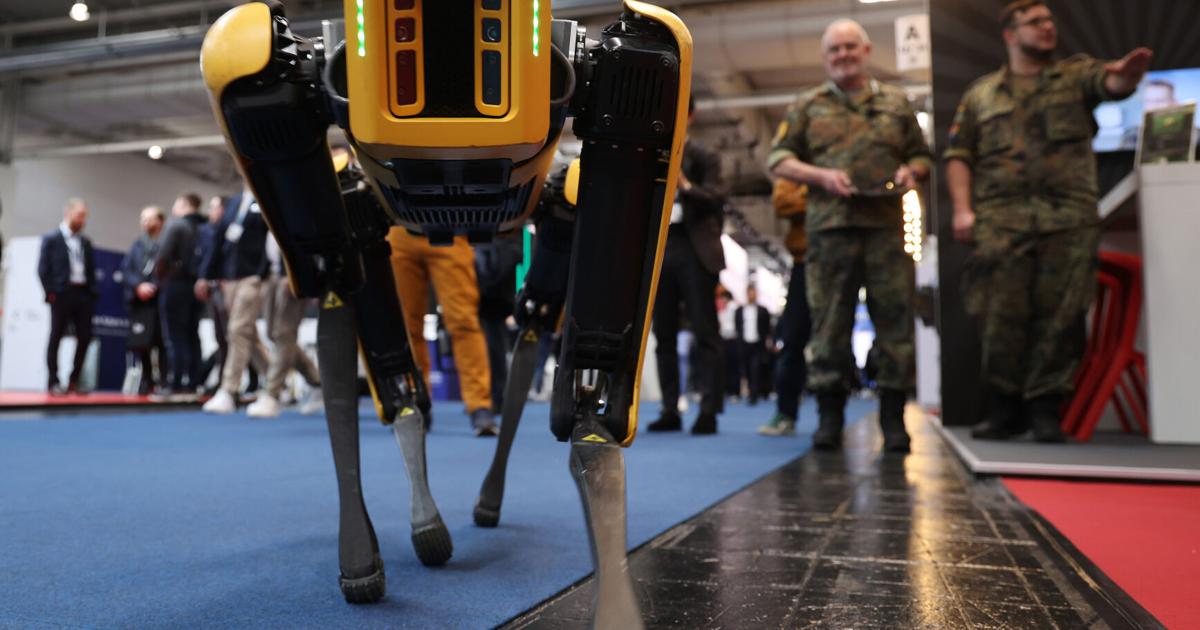
Spot, the dog robot from Boston Dynamics Inc., is perhaps best known for its dance routines to songs like “Uptown Funk,” but Spot also can climb stairs and open doors.
The four-legged robot, Spot, created by Boston Dynamics Inc., is transitioning from viral dance sensation to a serious piece of equipment in law enforcement, prompting both excitement and serious ethical questions. With a price tag of around $100,000, this sophisticated machine is increasingly being deployed by police departments across the nation, sparking debate about its role in public safety.
Spot, instantly recognizable for its dog-like appearance, is more than just a novelty. The robot's advanced capabilities extend far beyond its popular dance routines set to music like "Uptown Funk." It possesses a remarkable ability to navigate complex terrains, effortlessly climbing stairs and opening doors. These features make it particularly attractive to law enforcement agencies seeking solutions for challenging situations.
Police departments are touting Spot’s potential in hazardous environments. It can be sent into potentially dangerous situations, such as bomb threats or active shooter scenarios, allowing officers to assess the situation remotely without putting themselves in immediate danger. Spot can be equipped with cameras, sensors, and communication devices, providing valuable real-time information to officers on the ground. It can also be used to inspect potentially unstable structures or areas contaminated with hazardous materials.
However, the integration of Spot into police work is not without its critics. Civil liberties advocates and privacy experts are raising concerns about the potential for misuse and the erosion of privacy. Questions are being asked about how the data collected by Spot will be stored and used, and whether there are sufficient safeguards in place to prevent the robot from being used for surveillance or discriminatory targeting.
Some are worried that Spot could be weaponized, despite Boston Dynamics' pledge not to do so. The possibility of equipping the robot with lethal or non-lethal weapons raises serious ethical concerns about the potential for escalating violence and the dehumanization of policing.
The debate surrounding Spot highlights the complex challenges of integrating advanced technology into law enforcement. While the robot offers the potential to improve officer safety and enhance public safety, it also raises fundamental questions about privacy, accountability, and the appropriate use of force. As Spot becomes more prevalent in policing, it is crucial to have open and transparent discussions about its role and the ethical implications of its deployment. The future of policing may be robotic, but the rules governing their use need to be carefully considered and implemented to ensure fairness and protect civil liberties.
Spot, instantly recognizable for its dog-like appearance, is more than just a novelty. The robot's advanced capabilities extend far beyond its popular dance routines set to music like "Uptown Funk." It possesses a remarkable ability to navigate complex terrains, effortlessly climbing stairs and opening doors. These features make it particularly attractive to law enforcement agencies seeking solutions for challenging situations.
Police departments are touting Spot’s potential in hazardous environments. It can be sent into potentially dangerous situations, such as bomb threats or active shooter scenarios, allowing officers to assess the situation remotely without putting themselves in immediate danger. Spot can be equipped with cameras, sensors, and communication devices, providing valuable real-time information to officers on the ground. It can also be used to inspect potentially unstable structures or areas contaminated with hazardous materials.
However, the integration of Spot into police work is not without its critics. Civil liberties advocates and privacy experts are raising concerns about the potential for misuse and the erosion of privacy. Questions are being asked about how the data collected by Spot will be stored and used, and whether there are sufficient safeguards in place to prevent the robot from being used for surveillance or discriminatory targeting.
Some are worried that Spot could be weaponized, despite Boston Dynamics' pledge not to do so. The possibility of equipping the robot with lethal or non-lethal weapons raises serious ethical concerns about the potential for escalating violence and the dehumanization of policing.
The debate surrounding Spot highlights the complex challenges of integrating advanced technology into law enforcement. While the robot offers the potential to improve officer safety and enhance public safety, it also raises fundamental questions about privacy, accountability, and the appropriate use of force. As Spot becomes more prevalent in policing, it is crucial to have open and transparent discussions about its role and the ethical implications of its deployment. The future of policing may be robotic, but the rules governing their use need to be carefully considered and implemented to ensure fairness and protect civil liberties.
Category:
Entertainment